IUCN RED LIST
Established in 1964, The IUCN Red List is a critical indicator of the health of the world’s biodiversity. Species are classified by the IUCN Red List into nine groups, through criteria such as rate of decline, population size and area of geographic distribution as:
- Extinct (EX) – This species is no longer extant
- Extinct in the wild (EW) – Survives only in captivity, or through cultivation often outside native range
- Critically endangered (CR) – In an extremely critical state
- Endangered (EN) – Very high risk of extinction in the wild
- Vulnerable (VU) – At high risk of unnatural (human-caused) extinction
- Near Threatened (NT) – Close to being endangered in the near future
- Least Concern (LC) – Widespread and abundant in the wild
- Data Deficient (DD) – Inadequate information to assess extinction risk
- Not Evaluated (NE) – Has not yet been assessed




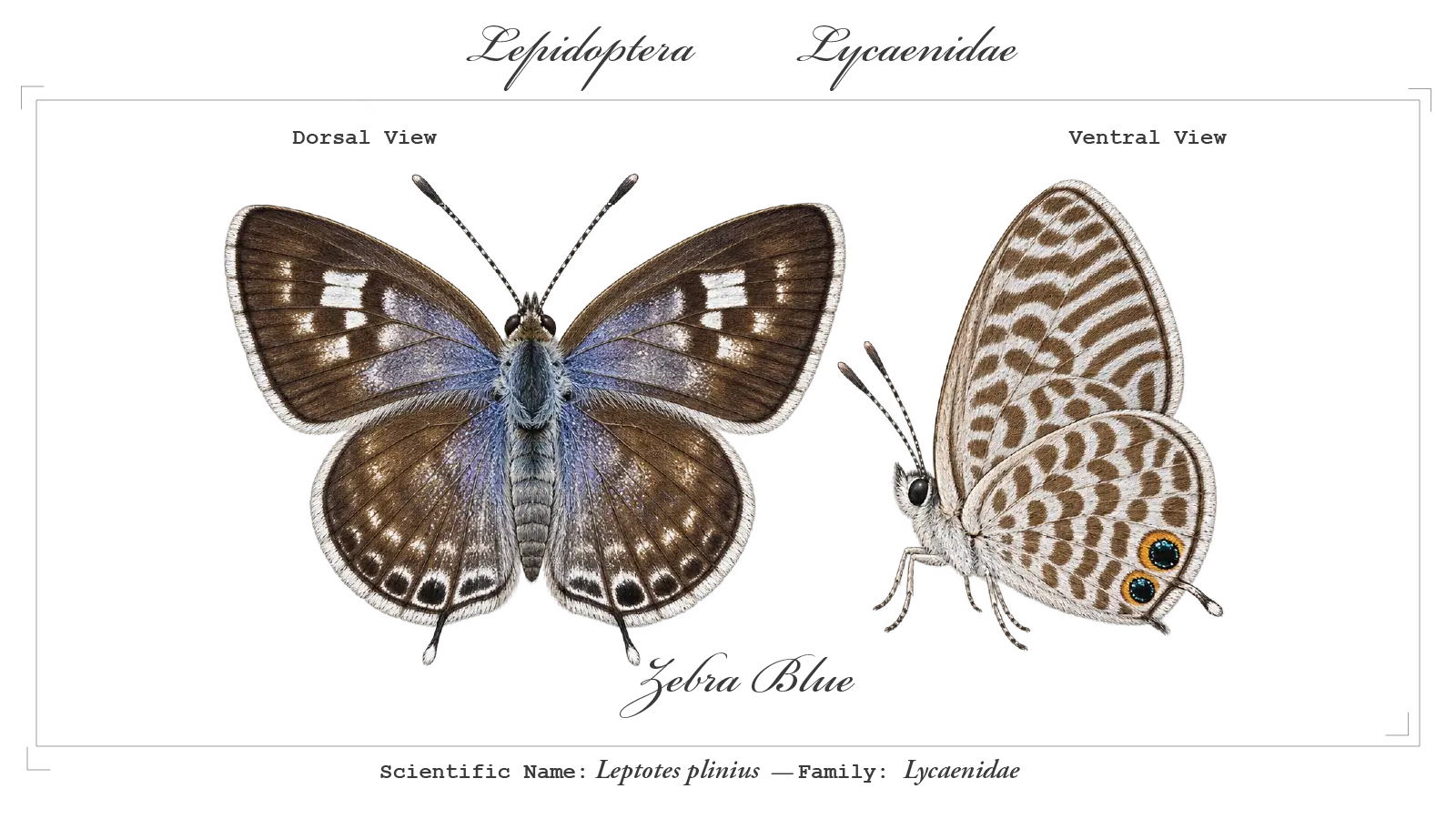
A delicate Lycaenid named for the striking zebra-like pattern of alternating dark bands and spots on its underside. Males are pale violet-blue to bluish-purple above; females are predominantly brownish with bluish colouration near the wing bases. Both sexes share the characteristic banded underside. The hindwings have small tails and conspicuous black-and-orange markings near the tornal area.
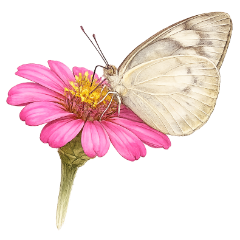
An active, fast-flying butterfly that stays close to its larval host plants. Males are territorial and will chase competing individuals. Adults visit flowers for nectar and frequently mud-puddle to obtain salts and minerals.

No regular long-distance migration. A resident species with local movements in response to host-plant and nectar availability.

Females lay eggs singly, particularly on flower buds of host plants. Larvae feed mainly on buds and flowers. Caterpillars may be attended by ants; a mutualistic relationship common in Lycaenidae.

The zebra-like underside pattern provides effective visual camouflage when the butterfly rests with wings closed. Hindwing tails and eyespot-like tornal markings may deflect predator attacks away from the head. Association with multiple host-plant groups provides ecological flexibility across different habitats.

Adults feed on floral nectar and visit damp soil for minerals. Larvae feed on buds and flowers of Plumbago zeylanica, P. auriculata, Indigofera, Mimosa, Sesbania, Albizia and Dalbergia species.

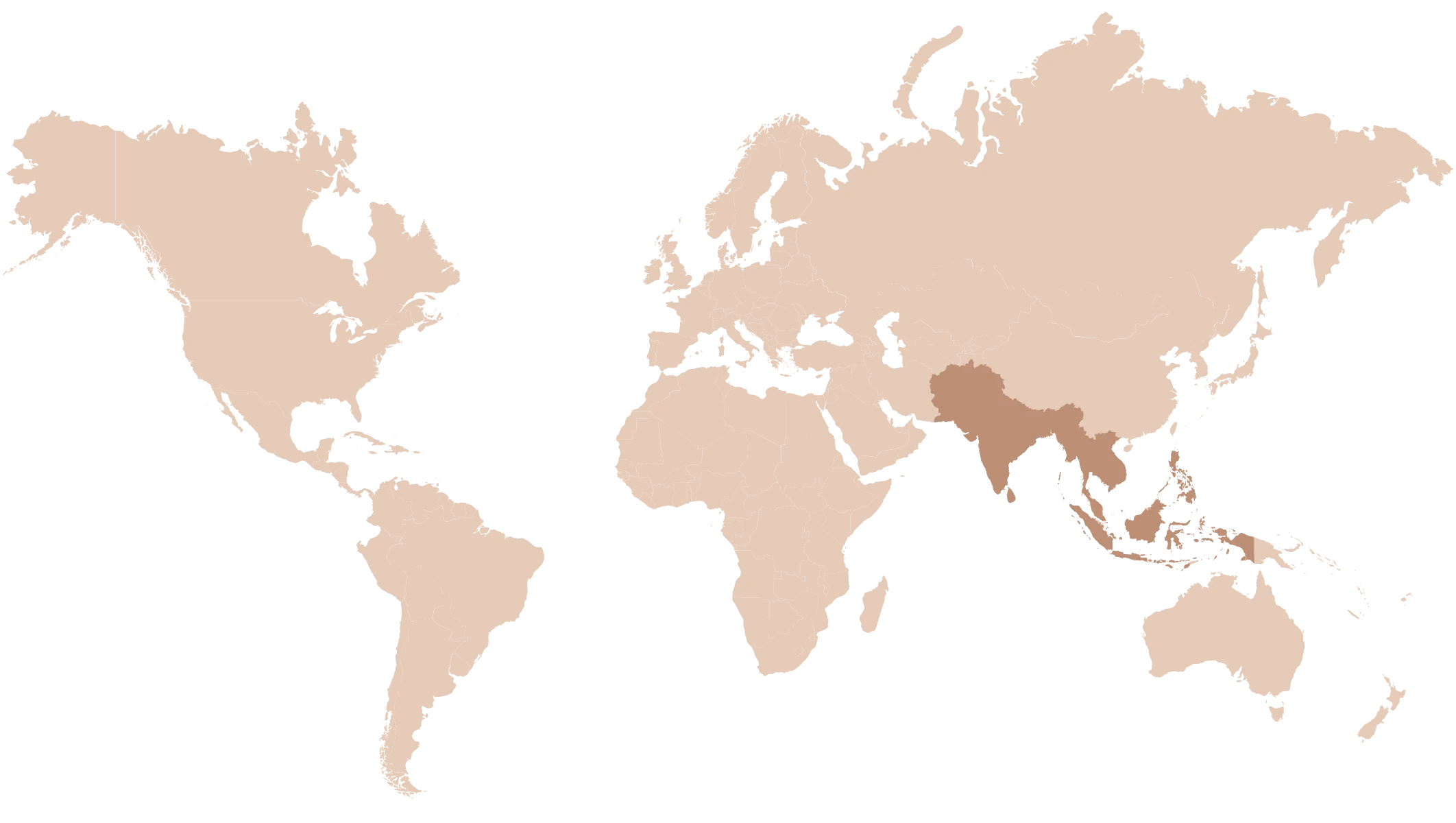
Open, dry and semi-dry areas, scrublands, grasslands, gardens, cultivated areas, forest edges and streamside vegetation. Occurs from low elevations to approximately 2,200 m.