IUCN RED LIST
Established in 1964, The IUCN Red List is a critical indicator of the health of the world’s biodiversity. Species are classified by the IUCN Red List into nine groups, through criteria such as rate of decline, population size and area of geographic distribution as:
- Extinct (EX) – This species is no longer extant
- Extinct in the wild (EW) – Survives only in captivity, or through cultivation often outside native range
- Critically endangered (CR) – In an extremely critical state
- Endangered (EN) – Very high risk of extinction in the wild
- Vulnerable (VU) – At high risk of unnatural (human-caused) extinction
- Near Threatened (NT) – Close to being endangered in the near future
- Least Concern (LC) – Widespread and abundant in the wild
- Data Deficient (DD) – Inadequate information to assess extinction risk
- Not Evaluated (NE) – Has not yet been assessed



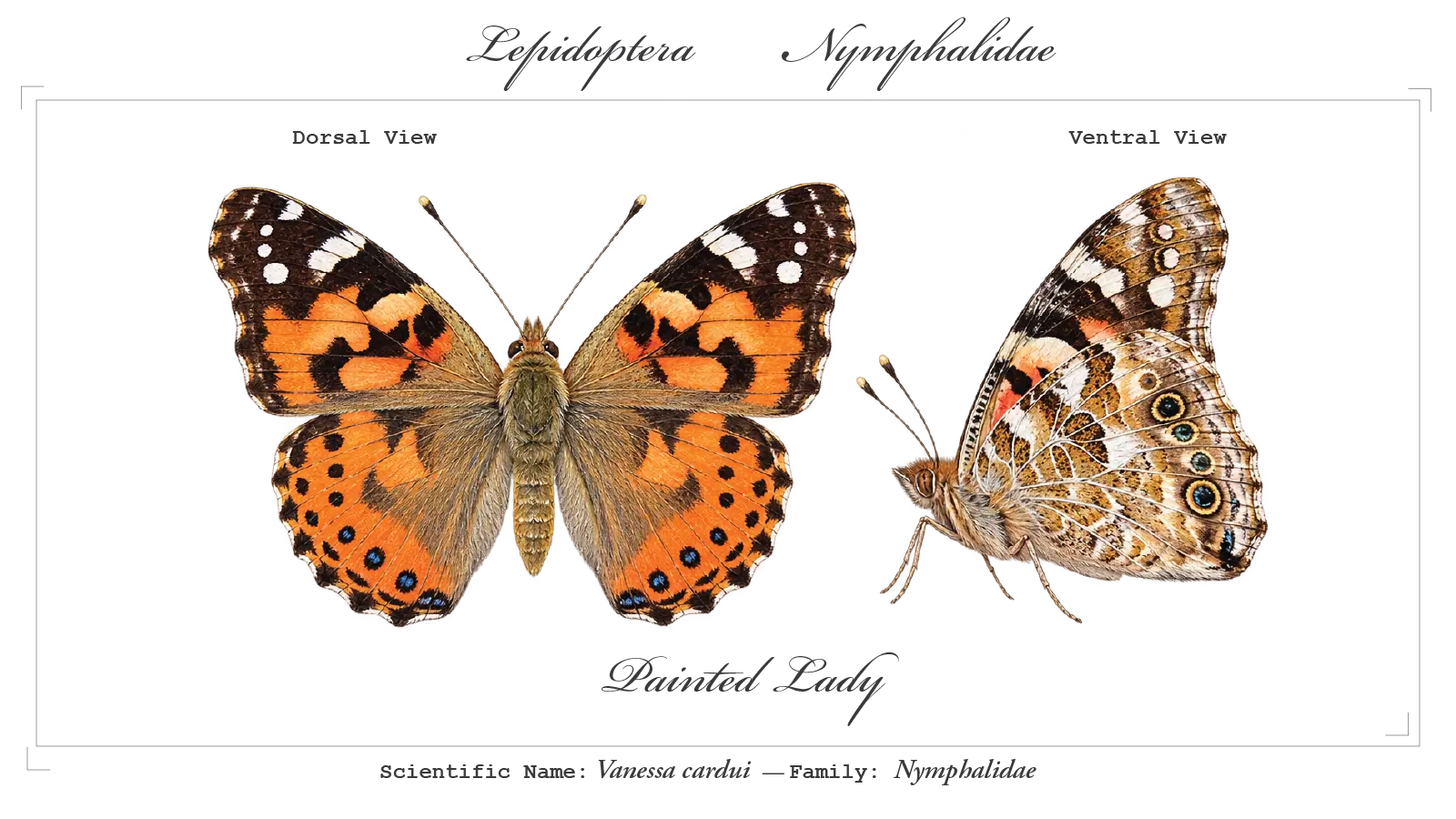
The upper wings are orange-brown with black and white markings, while the hindwings display a series of small eyespots. The underside is intricately patterned with shades of brown, grey, and orange, providing camouflage when the butterfly is at rest.
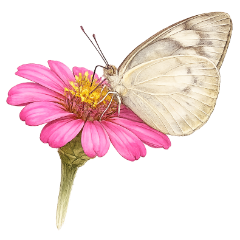
The Painted Lady is a strong, active, and highly migratory butterfly. It is frequently seen flying over open habitats and visiting flowers for nectar. Adults are capable of covering vast distances during migration and are active throughout the day, especially in warm, sunny conditions.

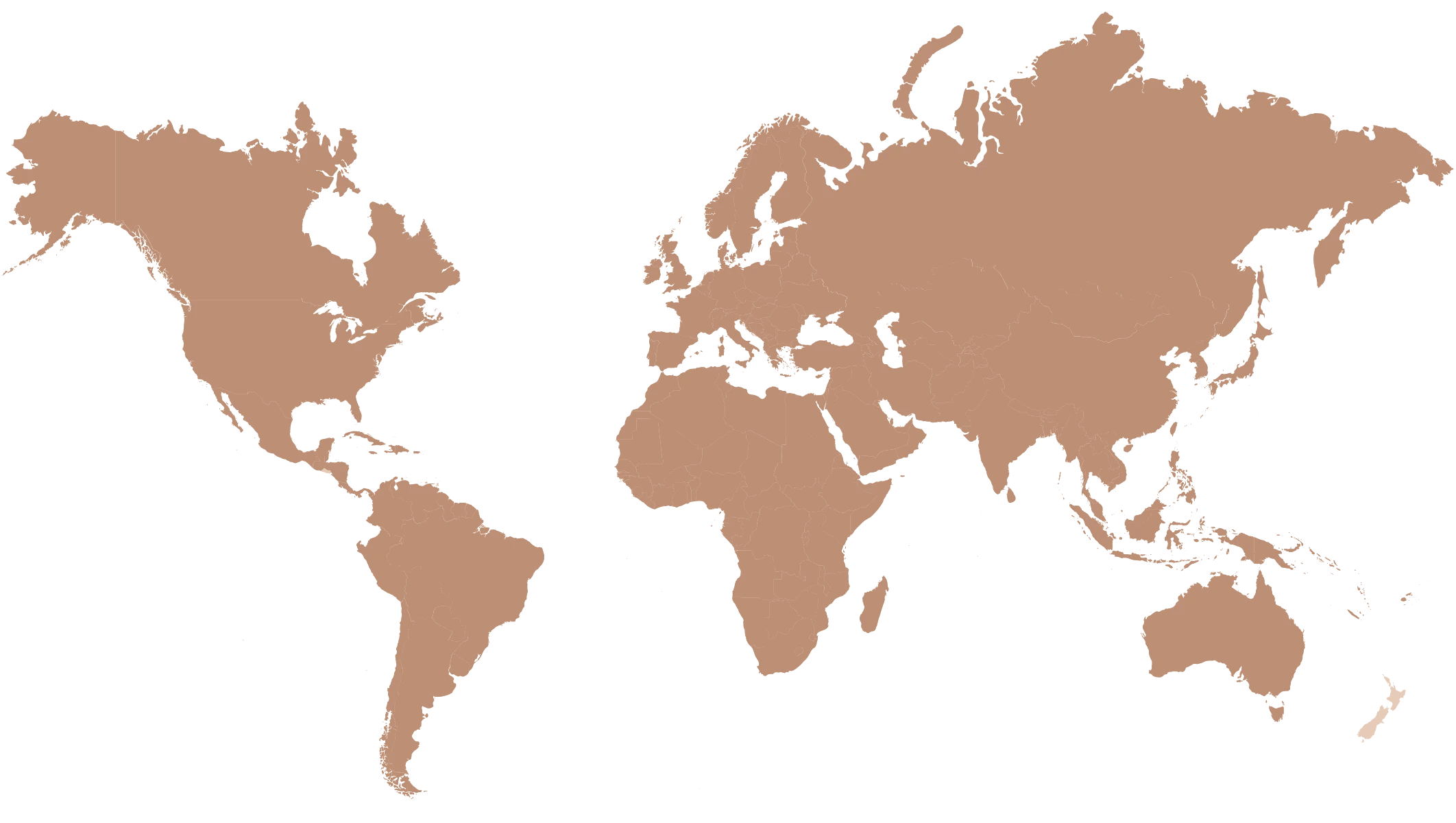
The Painted Lady is famous for its long-distance migrations, among the most extensive known in butterflies. Populations migrate seasonally across continents, with some individuals covering thousands of kilometers. In Europe and Asia, annual migrations may involve multiple generations.

Females lay eggs singly on host plants, primarily thistles (Cirsium spp.) and other members of the family Asteraceae, as well as mallows and nettles. Breeding occurs whenever suitable climatic conditions and host plants are available, often resulting in multiple generations each year.
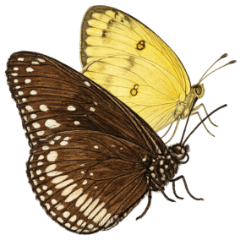
Exceptional flight endurance enables long-distance migration. The species is highly adaptable and can utilize a wide range of host plants. Rapid reproduction and the ability to exploit temporary habitats contribute to its global success. Camouflaged undersides help protect resting individuals from predators.

Adults feed on nectar from a wide variety of flowering plants. Caterpillars feed on leaves of thistles, mallows, nettles, and several other herbaceous plants. Larvae often construct silken shelters by folding leaves together.

It inhabits grasslands, meadows, agricultural fields, scrublands, deserts, forest edges, gardens, parks, coastal habitats, and urban green spaces