
IUCN RED LIST
Established in 1964, The IUCN Red List is a critical indicator of the health of the world’s biodiversity. Species are classified by the IUCN Red List into nine groups, through criteria such as rate of decline, population size and area of geographic distribution as:
- Extinct (EX) – This species is no longer extant
- Extinct in the wild (EW) – Survives only in captivity, or through cultivation often outside native range
- Critically endangered (CR) – In an extremely critical state
- Endangered (EN) – Very high risk of extinction in the wild
- Vulnerable (VU) – At high risk of unnatural (human-caused) extinction
- Near Threatened (NT) – Close to being endangered in the near future
- Least Concern (LC) – Widespread and abundant in the wild
- Data Deficient (DD) – Inadequate information to assess extinction risk
- Not Evaluated (NE) – Has not yet been assessed



The butterfly is predominantly black with white and red markings on the hindwings. Females exhibit remarkable mimicry and may resemble toxic butterfly species such as the Common Rose and Crimson Rose for protection against predators. Males are comparatively simpler in appearance with distinct pale spots and tailed hindwings.
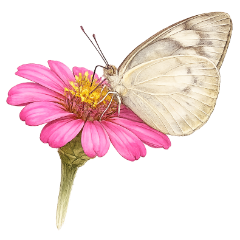
The Common Mormon is an active and swift-flying butterfly commonly seen visiting flowers during sunny hours. It flies close to vegetation and frequently pauses to nectar. Males often engage in mud-puddling to obtain essential minerals, while females are usually observed searching for host plants for egg laying.

The Common Mormon is considered largely non-migratory, though seasonal local dispersal may occur in response to climate, flowering patterns, and availability of larval host plants.

Breeding occurs throughout much of the year, particularly during monsoon and post-monsoon seasons. Females lay eggs singly on citrus plants and related host species. Caterpillars develop through multiple larval stages before forming a chrysalis attached to stems or leaves.
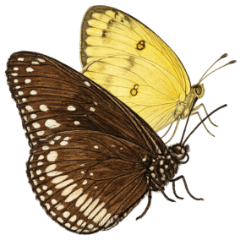
Females exhibit Batesian mimicry, imitating poisonous butterflies to avoid predation. Strong and agile flight helps escape predators efficiently. Caterpillars possess an osmeterium, a defensive organ that emits unpleasant odours when threatened.Larvae resemble bird droppings during early stages, providing excellent camouflage

Adult butterflies feed on nectar from flowering plants including lantana, jasmine, ixora, and zinnia. Caterpillars primarily feed on leaves of citrus plants such as lemon, orange, and curry leaf plants.

It inhabits gardens, forest edges, agricultural fields, urban parks, scrublands, and tropical deciduous forests. The species adapts well to both rural and urban environments, especially where citrus plants are abundant.