
IUCN RED LIST
Established in 1964, The IUCN Red List is a critical indicator of the health of the world’s biodiversity. Species are classified by the IUCN Red List into nine groups, through criteria such as rate of decline, population size and area of geographic distribution as:
- Extinct (EX) – This species is no longer extant
- Extinct in the wild (EW) – Survives only in captivity, or through cultivation often outside native range
- Critically endangered (CR) – In an extremely critical state
- Endangered (EN) – Very high risk of extinction in the wild
- Vulnerable (VU) – At high risk of unnatural (human-caused) extinction
- Near Threatened (NT) – Close to being endangered in the near future
- Least Concern (LC) – Widespread and abundant in the wild
- Data Deficient (DD) – Inadequate information to assess extinction risk
- Not Evaluated (NE) – Has not yet been assessed




The Blue Mormon is a large swallowtail butterfly with velvety black wings adorned with brilliant iridescent blue patches on the hindwings. Unlike many swallowtails, it lacks tail-like extensions on the hindwings. Females are generally larger and slightly paler than males.
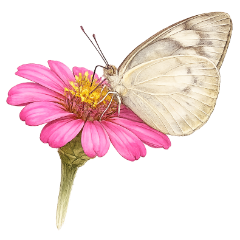
Blue Mormons are strong and active fliers, usually seen fluttering rapidly between flowering plants. They are highly alert and difficult to approach closely. Males are often observed mud-puddling near damp soil to absorb minerals, while females spend more time searching for suitable host plants for egg laying.

The Blue Mormon is generally considered a non-migratory species. However, local seasonal movements may occur in response to rainfall, flowering patterns, and availability of host plants.

Mating generally occurs during warmer months and monsoon seasons when vegetation is abundant. Females lay eggs singly on the leaves of citrus and rutaceous plants. The caterpillars undergo several larval stages before pupating into chrysalis form attached to twigs or stems.

Strong wing muscles enable rapid and sustained flight. Dark wing coloration helps absorb heat efficiently. Bright blue markings may assist in mate recognition and predator distraction. Caterpillars possess defensive osmeterium organs that emit foul odours to deter predators.

Adult butterflies feed mainly on nectar from flowering plants such as lantana, ixora, jasmine, and clerodendrum. Caterpillars feed primarily on leaves of citrus plants including lemon, orange, and curry leaf plants.

The Blue Mormon is commonly found in moist deciduous forests, evergreen forests, gardens, plantations, and urban green spaces. It prefers habitats rich in citrus plants, which serve as larval host plants.