IUCN RED LIST
Established in 1964, The IUCN Red List is a critical indicator of the health of the world’s biodiversity. Species are classified by the IUCN Red List into nine groups, through criteria such as rate of decline, population size and area of geographic distribution as:
- Extinct (EX) – This species is no longer extant
- Extinct in the wild (EW) – Survives only in captivity, or through cultivation often outside native range
- Critically endangered (CR) – In an extremely critical state
- Endangered (EN) – Very high risk of extinction in the wild
- Vulnerable (VU) – At high risk of unnatural (human-caused) extinction
- Near Threatened (NT) – Close to being endangered in the near future
- Least Concern (LC) – Widespread and abundant in the wild
- Data Deficient (DD) – Inadequate information to assess extinction risk
- Not Evaluated (NE) – Has not yet been assessed



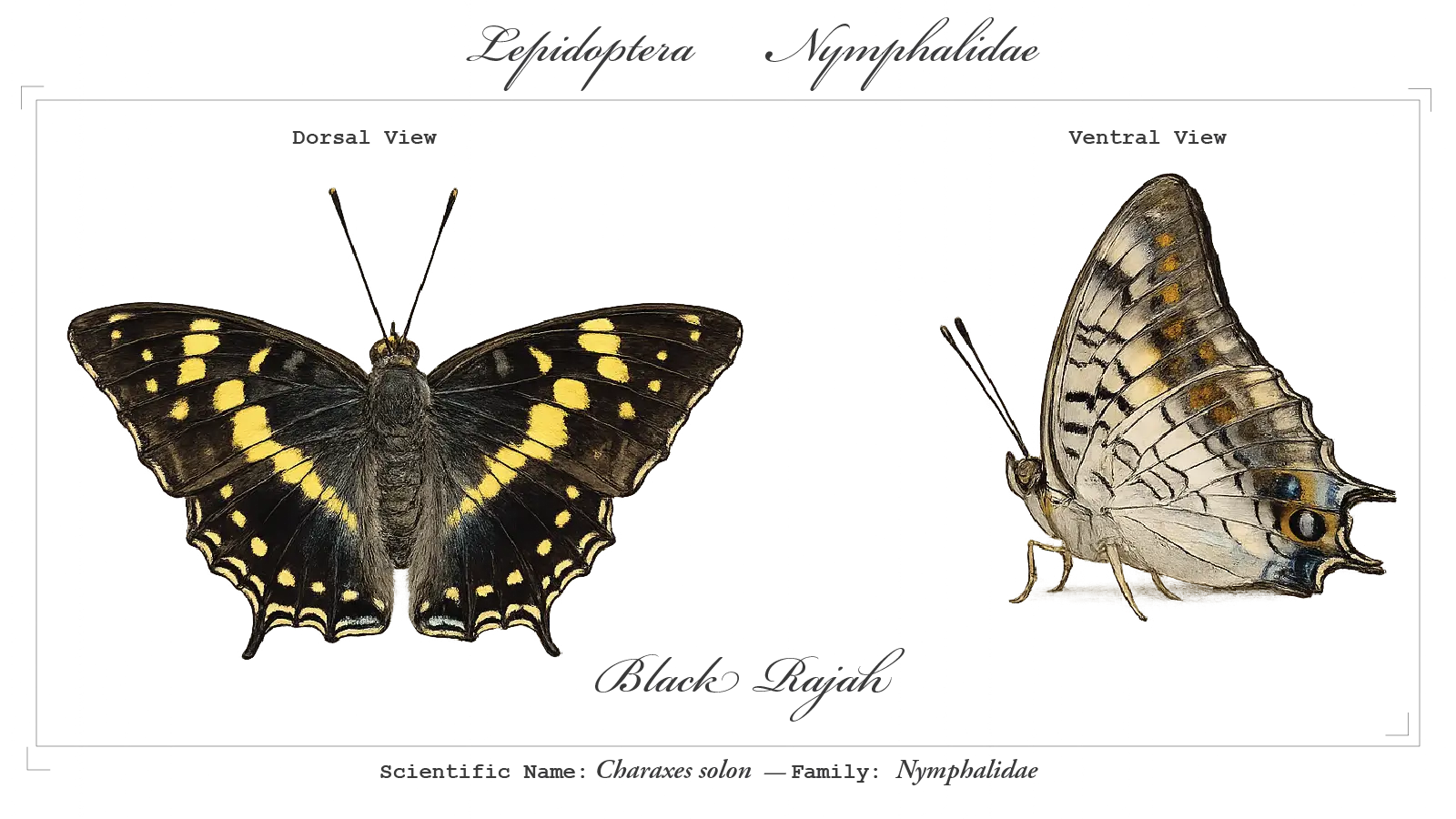
The wings are predominantly dark brown to black with striking pale bluish-white or cream bands across both wings. The hindwings possess short tail-like projections characteristic of many Charaxes butterflies. The underside is beautifully patterned with earthy shades that provide camouflage against tree bark and dead leaves.
The Black Rajah is a powerful and fast-flying butterfly known for its strong territorial behaviour. Males are often seen perching on tree branches or sunny clearings while defending their territory from intruders. It usually flies high among trees but occasionally descends to feed on fruits, sap, or moist ground.

The Black Rajah is non-migratory, though local seasonal movements may occur in response to rainfall and food resources.

Breeding occurs mainly during monsoon and post-monsoon seasons. Females lay eggs singly on host plants belonging to families such as Fabaceae and Meliaceae. Caterpillars are solitary and feed on leaves before pupating on stems or foliage. Males actively patrol territories and court females through aerial displays.
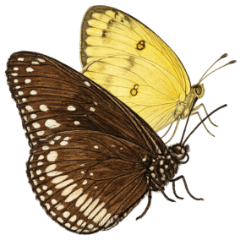
Strong muscular wings support rapid and powerful flight. Dark wing coloration helps absorb heat in shaded forest habitats. Camouflaged undersides provide protection while resting. Tail-like hindwing extensions may divert predator attacks away from vital body parts.
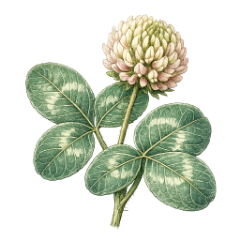
Adult Black Rajahs feed mainly on fermenting fruits, tree sap, animal droppings, and occasionally flower nectar. They are particularly attracted to overripe fruits and damp mineral-rich soil. Caterpillars feed on leaves of selected host plants.

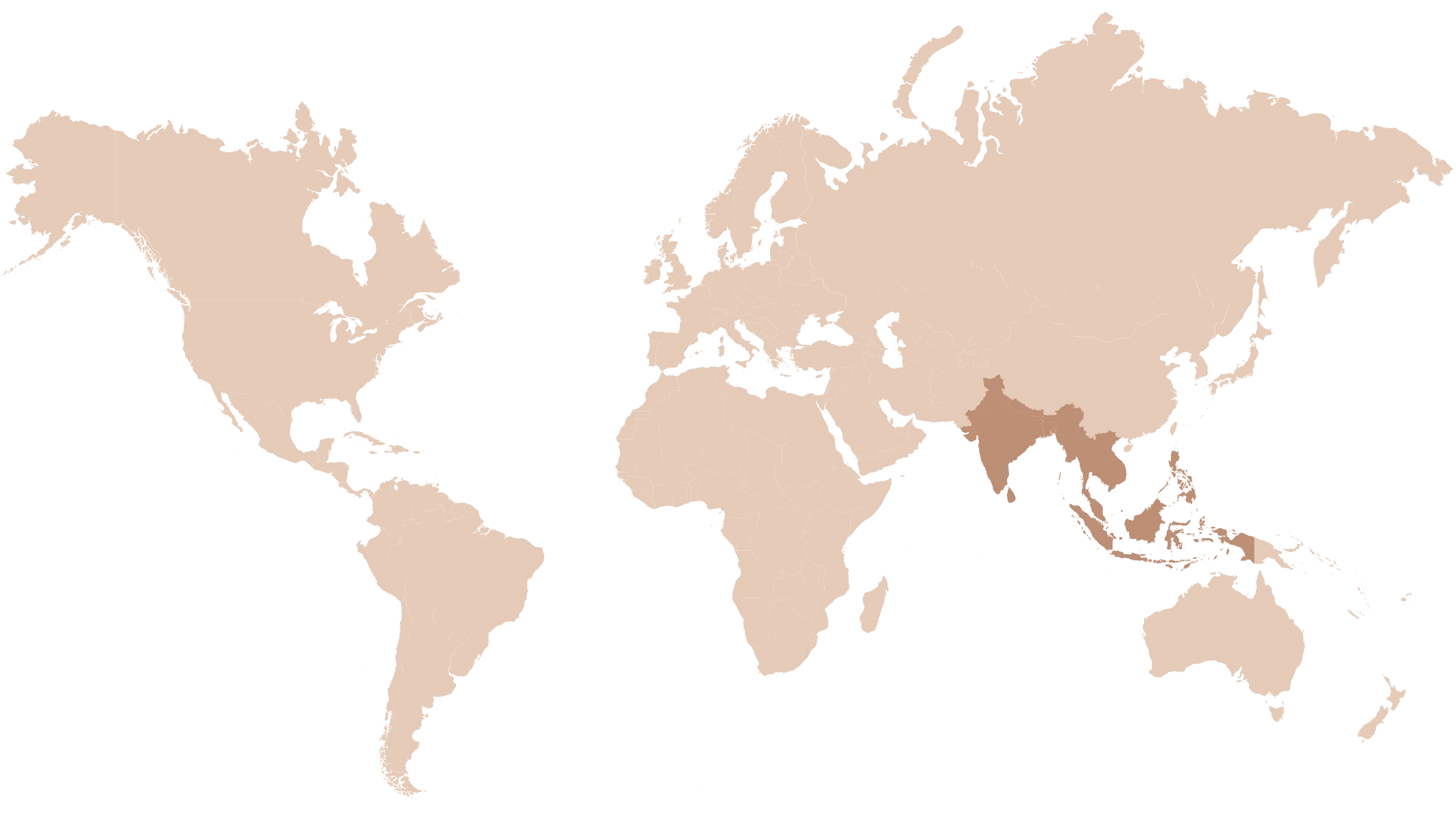
The Black Rajah is commonly found in tropical forests, moist deciduous forests, forest edges, plantations, riverine vegetation, and shaded gardens. It prefers dense woodland habitats with abundant host plants and fruiting trees.