IUCN RED LIST
Established in 1964, The IUCN Red List is a critical indicator of the health of the world’s biodiversity. Species are classified by the IUCN Red List into nine groups, through criteria such as rate of decline, population size and area of geographic distribution as:
- Extinct (EX) – This species is no longer extant
- Extinct in the wild (EW) – Survives only in captivity, or through cultivation often outside native range
- Critically endangered (CR) – In an extremely critical state
- Endangered (EN) – Very high risk of extinction in the wild
- Vulnerable (VU) – At high risk of unnatural (human-caused) extinction
- Near Threatened (NT) – Close to being endangered in the near future
- Least Concern (LC) – Widespread and abundant in the wild
- Data Deficient (DD) – Inadequate information to assess extinction risk
- Not Evaluated (NE) – Has not yet been assessed




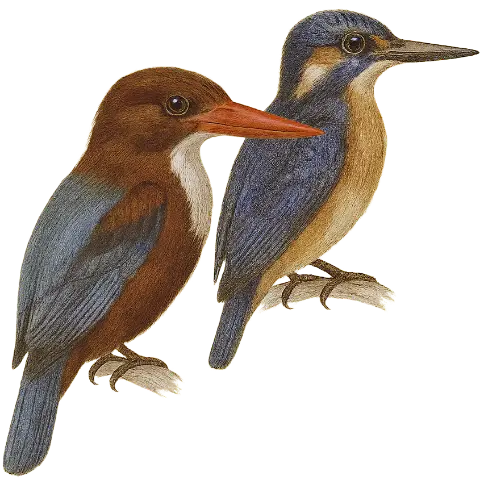



Male Oriental Magpie Robins are bold and glossy, while females have softer, duller tones. The male has a shiny blue-black head, back, throat and upper chest, with a white belly, vent and a bright white patch on the wings. His tail is black with white outer feathers and is often held upright when he perches. The female is greyish-brown above and paler below, with the same white wing patch but without the male's glossy shine. Young birds look more like females but are browner and may show light mottling on the chest.
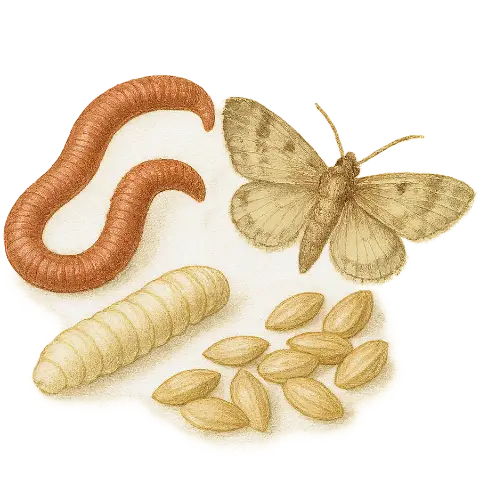
The Oriental Magpie Robin feeds mainly on insects such as ants, beetles, caterpillars, spiders and other small invertebrates. It also consumes worms, small snails and occasionally berries or seeds. It is an active and agile forager, usually feeding alone or in pairs on the ground or low branches. The bird hops briskly while flicking its tail, using sharp eyesight to detect prey hidden in leaf litter or open ground. It often perches on rocks or low branches to watch for movement and then uses a quick dash or short flight to capture prey, a technique known as "perch-and-drop." Feeding activity increases during the rainy season when insects are more abundant, especially around dawn and dusk.

This bird likes to live in open woodlands, secondary forests, mangroves, gardens, parks and cultivated areas, often near human settlements. The Oriental Magpie Robin thrives in both rural and urban environments, preferring locations with trees and undergrowth for nesting and foraging. It can live in altitudes up to 2,000 m and has adapted to diverse habitats.
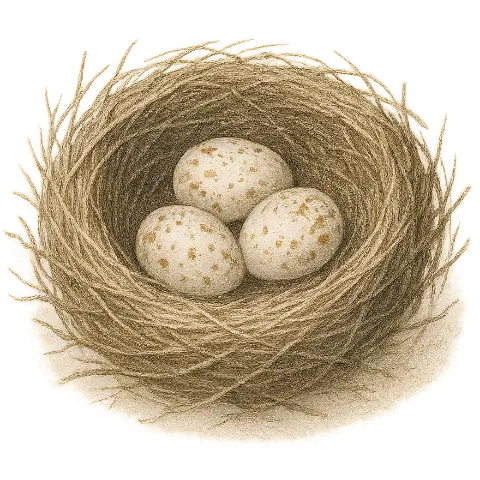
Nest: A neat cup-shaped nest is made from grass, leaves, roots and twigs. It is usually placed inside safe spaces like tree hollows, gaps in walls, crevices or even nest boxes around houses and gardens. These protected sites help keep the eggs hidden.
Clutch Size: 3 to 5 pale greenish or bluish eggs with brown spots. The female incubates the eggs for about 10 to 12 days while the male guards their territory. Both parents feed them until they are ready to leave the nest, usually after 12 to 14 days. In good conditions, a pair may raise two broods in one season.