IUCN RED LIST
Established in 1964, The IUCN Red List is a critical indicator of the health of the world’s biodiversity. Species are classified by the IUCN Red List into nine groups, through criteria such as rate of decline, population size and area of geographic distribution as:
- Extinct (EX) – This species is no longer extant
- Extinct in the wild (EW) – Survives only in captivity, or through cultivation often outside native range
- Critically endangered (CR) – In an extremely critical state
- Endangered (EN) – Very high risk of extinction in the wild
- Vulnerable (VU) – At high risk of unnatural (human-caused) extinction
- Near Threatened (NT) – Close to being endangered in the near future
- Least Concern (LC) – Widespread and abundant in the wild
- Data Deficient (DD) – Inadequate information to assess extinction risk
- Not Evaluated (NE) – Has not yet been assessed





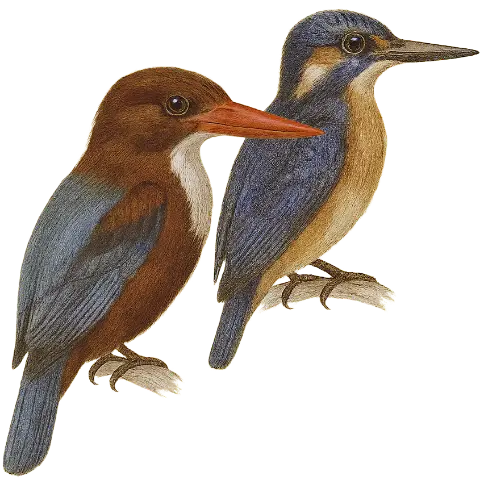




Green Bee-Eaters are bright and colourful birds. They have vivid green feathers all over, a golden-green crown and a black line through the eye that looks like a mask. The throat is turquoise-blue with a thin black band, called a gorget, just below it. The wings and back are bright green and the tail has two long central feathers called streamers, which are longer in males. Young birds do not have the long tail streamers and are duller green overall.
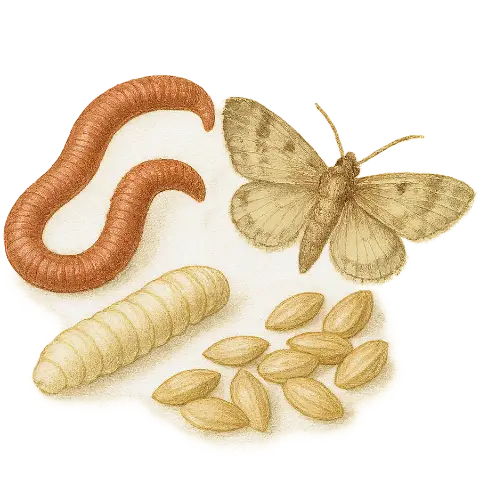
The Little Green Bee-Eater feeds mainly on flying insects such as bees, wasps, dragonflies and butterflies. It is an aerial hunter, often seen perched on low branches, wires or rocks while scanning the air for prey. When an insect is spotted, it makes a swift, direct flight to catch it mid-air and then returns to the same perch. Before swallowing stinging insects, it rubs them against a hard surface to remove the stinger and venom sac. It repeats this perch-and-pursuit behavior throughout its feeding routine, showing precision and agility in the air.

The Little Green Bee-Eater thrives in open countrysides, farmlands, grasslands, scrublands, forest edges and semi-desert regions. It prefers areas with sandy banks or open ground for nesting and perches in open spaces for hunting.
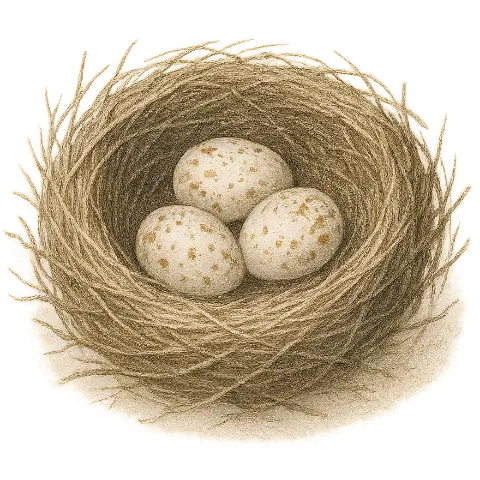
Nest: The nest is a tunnel dug into sandy banks, mud walls or even flat ground. This tunnel can be quite long, about 1 to 2 m and ends in a small round chamber where the eggs are laid. Both the male and female dig the tunnel and take care of the nest.
Clutch Size: 4 to 7 white eggs. Both parents share incubation duties and caring for the chicks after they hatch. The pair forms a strong seasonal bond and stays together through the breeding period.