IUCN RED LIST
Established in 1964, The IUCN Red List is a critical indicator of the health of the world’s biodiversity. Species are classified by the IUCN Red List into nine groups, through criteria such as rate of decline, population size and area of geographic distribution as:
- Extinct (EX) – This species is no longer extant
- Extinct in the wild (EW) – Survives only in captivity, or through cultivation often outside native range
- Critically endangered (CR) – In an extremely critical state
- Endangered (EN) – Very high risk of extinction in the wild
- Vulnerable (VU) – At high risk of unnatural (human-caused) extinction
- Near Threatened (NT) – Close to being endangered in the near future
- Least Concern (LC) – Widespread and abundant in the wild
- Data Deficient (DD) – Inadequate information to assess extinction risk
- Not Evaluated (NE) – Has not yet been assessed





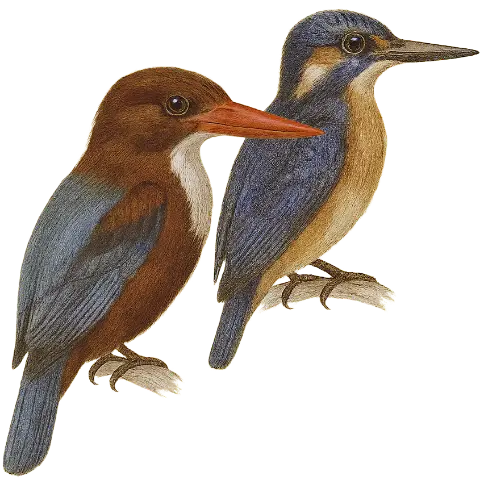




Jungle Babblers are mostly brownish-grey birds with paler underparts and slightly darker wings and tail. Their feathers when fluffed up give them a scruffy appearance. The throat and chest have light grey or whitish streaks. They have a yellowish bill that stands out against the greyish face and eyes. Males and females look the same, with no noticeable changes in plumage through the seasons.
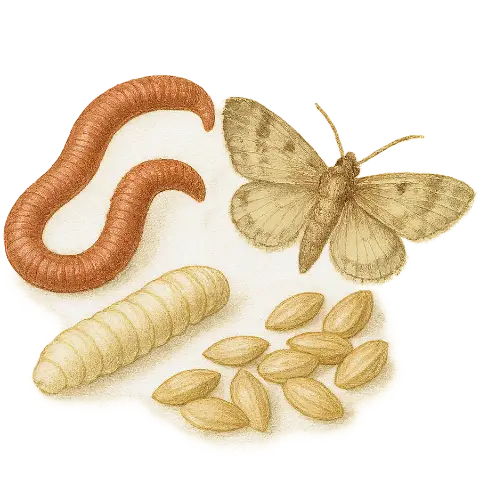
The Jungle Babbler is a social ground-feeding bird that usually forages in groups of six to ten individuals. It feeds on insects, spiders, worms, grains, fruits and even human food scraps. Moving noisily together, the group turns over leaves and debris with their bills, scratching and probing the soil or leaf litter to uncover hidden prey. Feeding occurs mainly in the morning and late afternoon. During the breeding season, they rely more heavily on insects to feed their young. Their cooperative foraging behavior and adaptability allow them to thrive in both natural habitats and areas near human settlements.
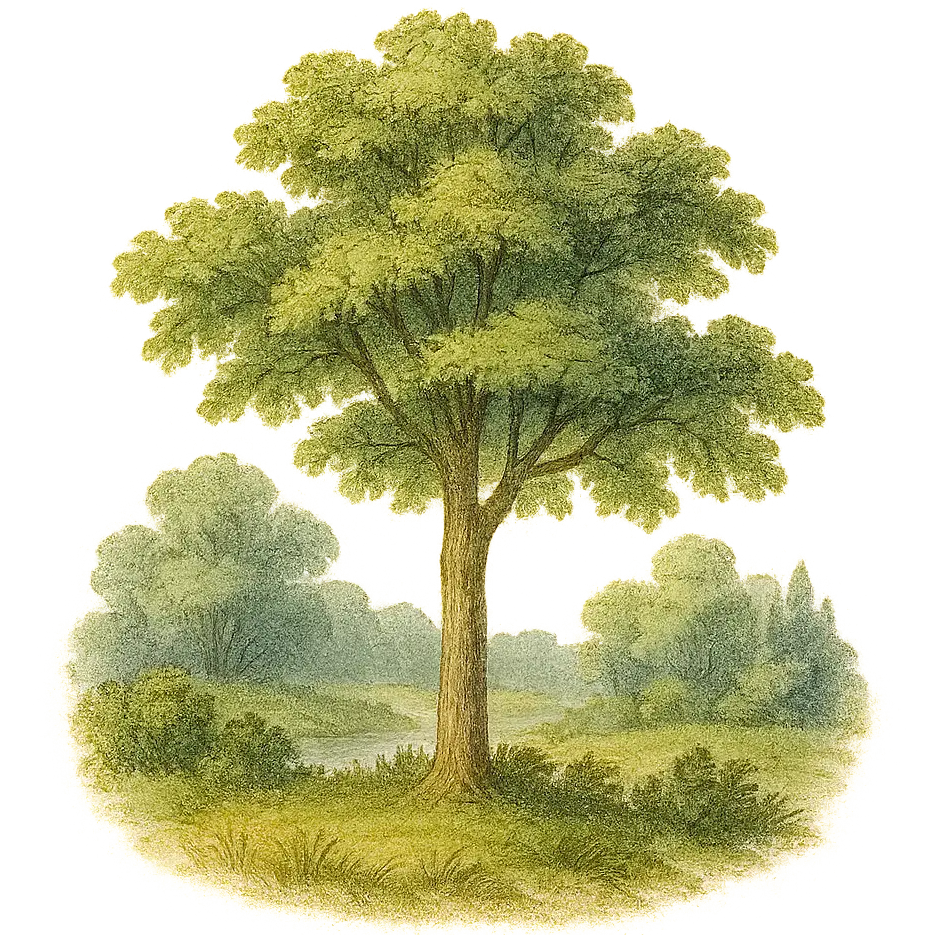
The Jungle Babbler prefers open wooded areas, scrublands, gardens, farmlands and urban parks. These birds thrive in semi-arid regions, dry deciduous forests and suburban gardens, showing great adaptability to human presence and are a common sight in villages and towns where trees and shrubs are abundant.
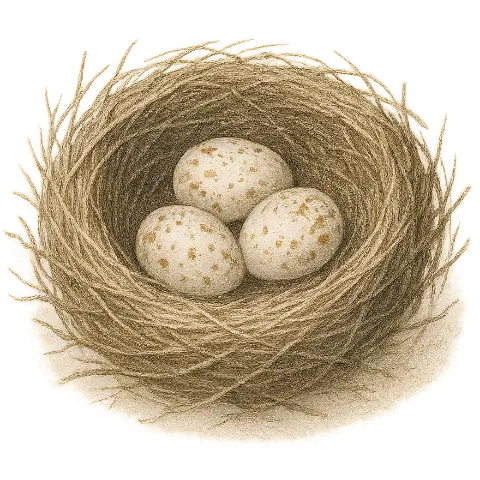
Nest: A deep cup-shaped nest is made from twigs, grass, roots and leaves. It is usually placed in bushes or low trees. Jungle Babblers live in groups and these groups often work together to build the nest, keep watch and protect their area.
Clutch Size: 3 to 5 pale blue eggs. Both parents, along with additional "helpers" in the group, take turns incubating and feeding the chicks. This teamwork increases the survival chances of the young.